
There must be something strangely sacred in salt. It is in our tears and in the sea.
~Kahlil Gibran
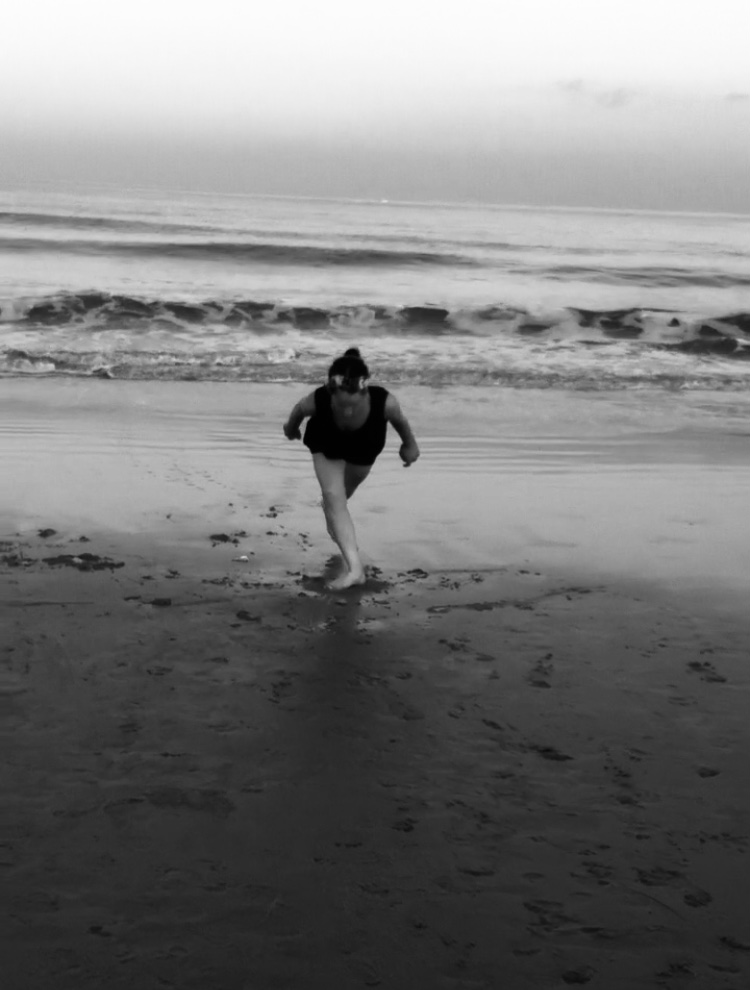
It’s summertime 2021 and the Delta variant of Covid is surging. The pandemic is nowhere near over, as many predicted it would be. And I’m still taking to the sea even though I drove away from it yesterday to return to work and to my home in Swarthmore. In the eerie nighttime beauty of this vacant college town I take late walks to remember what the sea teaches about uncertainty. The spaciousness of the empty roads brings the waves. Rough surf and rush of sea foam, I’m again knee deep in saltwater. Feet burrowing into sand, I’m relating to the waves in recently discovered ways: remembering to experience life’s difficulties not as obstacles, but rather as opportunities to move through the world anew, alight with grace.
I began to learn what the sea teaches back in 2018, throughout many solitudinous and strange months that foreshadowed the pandemic. Because of circumstances beyond my control, I unexpectedly lived on an island that was a ghost town for the majority of the year. I knew no one. Life was suddenly wild with betrayal and alienation, acute health complications, dispossession and apocalyptic landscapes. But the Atlantic Ocean was my backyard. So I did what anyone would do when confronted with such beauty, I ran right toward it. I dug my feet into the force of uncertainty’s indifference, more alive to it than ever. Alive to the ways in which the might of all that is scary and unfathomable can pull me under and toss me about and make me lose myself. But I did this precisely to learn how to be alive to a force far more mighty—grace.
Day after day I planted myself firmly in the turbulence of the surf to balance, figuring out equanimity as the sand rushed out from under my feet. And “stillness gave rise to dancing.” I learned to be fearless in the face of waves that threatened to destabilize by moving in alignment with them, and even by moving against them. I would mirror the waves’ deep upward curl while stepping backward into their breaks, turning in, letting the change carry me where it would, and then rolling onto solid ground. And it is not hyperbolic to write that the sea saved my life.
For it would unfold to be two years that I lived on my own on this island where I knew no one, a place that was also eerily deserted for the majority of the time. All while I was still newly figuring out not only what it meant to be disabled from a cervical spine surgery with severely impeded mobility at times, but also how to get through an extremely dangerous cutoff from a benzodiazepine.
During this freighted yet healing time, the sea taught me something that I need to continue to remember: Extremity is often the best crucible. Instead of overwhelming us, occupying us with fear, and tossing us away, it can reveal in us a degree of mettle and creativity and blessing we never knew we had.
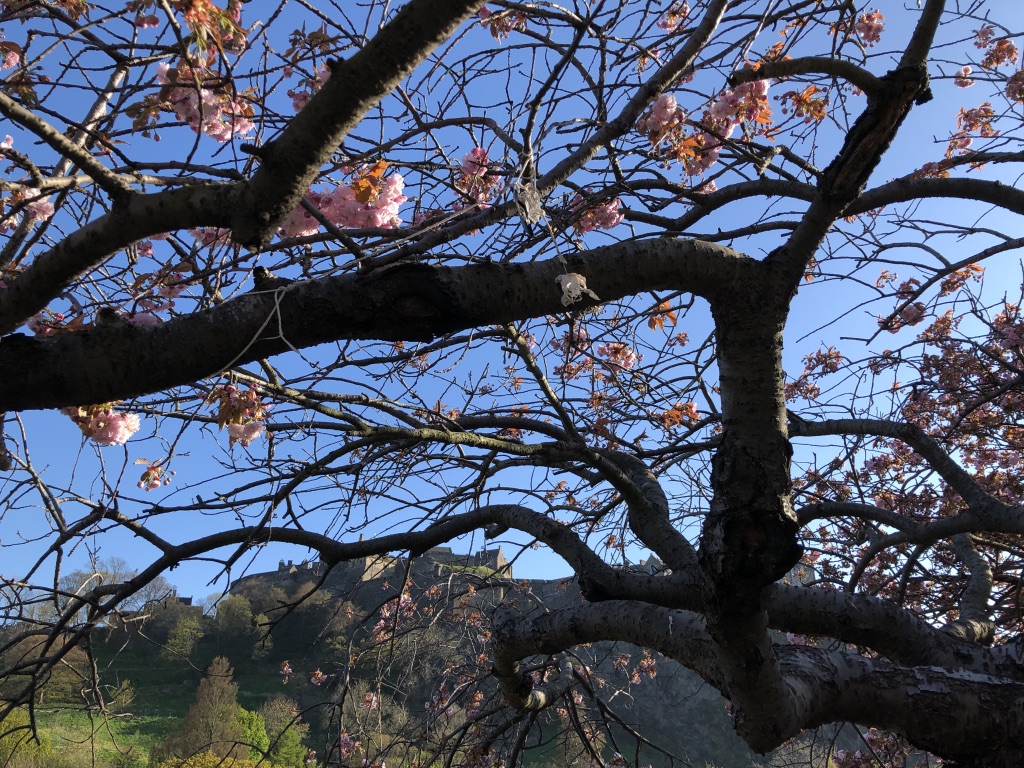
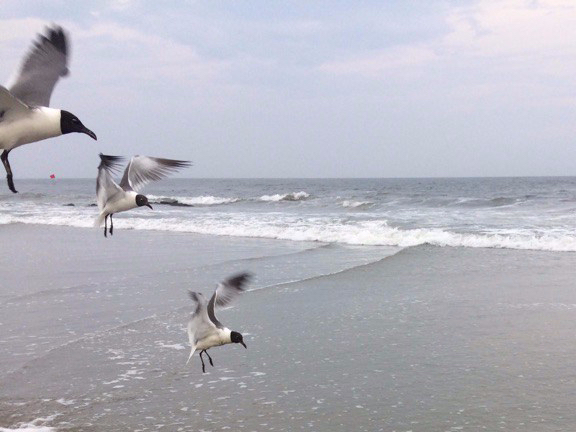
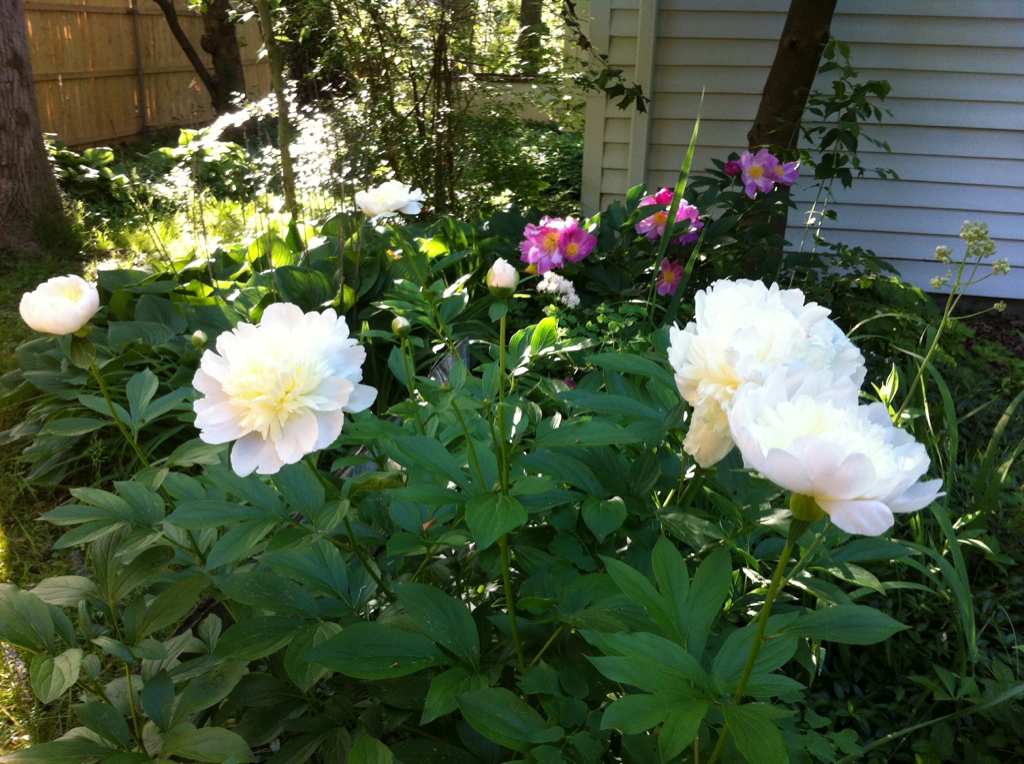
Yesterday, before I drove home, I ran into the Atlantic one last time. The current was stormy. But the sea floor tearing out from under me gave rise to profound simplicity. I found my footing moment by moment by plieing and by making gentle shifts in alignment, maintaining poise amidst the pull of the deep. And when the crashing of a wave or the sharp slant of the current made it impossible to balance, I only needed to take a step and then a small, quick cross-step to land on solid ground. Stability is never more than a mere inch and a breath away. I had the ocean to myself, sun bathers and beach walkers all behind me on dry land, so I didn’t need to open my eyes. I preferred to trust in the principles of providence that I’d long ago learned were at play. But then I was startled by something wrapping around my legs. Tentacles?! Seaweed? Jellyfish?? I am the most squeamish person alive, so my eyes opened immediately while I tried not to scream. I looked down to find long stemmed flowers, ballet-shoe pink and dotted orange, festooning my ankles. Then bagpipes began to play “Amazing Grace.” And as I bent to pick up the flowers , a surge of red petals flowed in and stilled where I was standing, pooling around my feet.
Now near the Swarthmore train tracks, miles away from the coast, the Scottish hymn is still singing. Rose petals and holy water are on the soles of our feet, ankles green-stemmed, new blooms floating behind us as the ocean carries us onward. We’re all awash in sea foam, drenched in this audacious grace that gives us what we least expect at the exact time we need it. Showing us that, “the universe conspires in our favor,” silencing chaos and feeding us moment by moment here on the vertiginous edge of so many questions and currents and tidelines.




 Wrens on a Wire by Amanda Varrella